
Home » Conditions » Depression Treatment
Depression can make everyday life feel heavy. Getting out of bed may feel hard. Basic responsibilities may take more energy than you have. You may feel numb, disconnected, ashamed, hopeless, or tired of trying to explain what is going on.
For some people, drugs or alcohol become a way to escape those feelings. Substances may seem to offer temporary relief, but over time, they can deepen depression and make recovery harder.
Blue Ridge Recovery Center provides residential addiction treatment for adults with a primary substance use disorder and co-occurring mental health conditions. Our program focuses on addiction first, while also helping you address depression when it affects substance use, cravings, motivation, and recovery.
Depression can make addiction feel even heavier, especially when substances become a way to numb pain or get through the day. Treatment can help you break that cycle with support, structure, and care.
Depression and addiction often affect each other. You may use alcohol or drugs to numb sadness, quiet self-critical thoughts, sleep, feel something, or avoid emotional pain. At first, substance use may feel like relief. Later, it can create more isolation, shame, physical health problems, relationship strain, and emotional crashes.
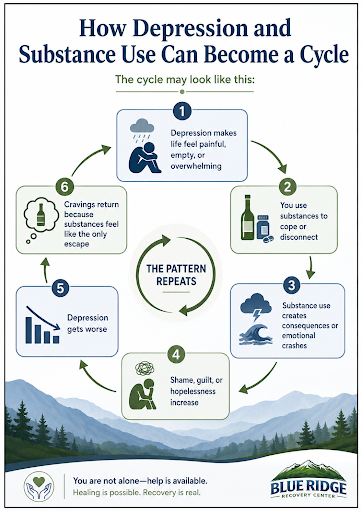
This is why depression treatment matters in addiction recovery. If depression is driving substance use, or substance use is making depression worse, both need to be addressed within the same treatment plan.
Depression does not always look like crying or sadness. Some people feel emotionally numb. Others feel irritable, exhausted, disconnected, or unable to care about things that once mattered.
Common signs of depression may include:
When depression and addiction happen together, symptoms may become more intense during early recovery, withdrawal, stress, conflict, or major life changes.
You may benefit from depression treatment if low mood, hopelessness, or emotional pain is making it harder to stop using substances. You do not need to have a formal diagnosis before reaching out. A clinical assessment can help determine what kind of support may be appropriate.
You may need help if:
If you are searching for depression treatment near me and substance use is also part of the picture, integrated residential care may offer the structure and support you need.
Depression can appear alongside many substance use disorders. Sometimes depression came first, and substance use became a way to cope. Other times, long-term substance use changed mood, sleep, motivation, or emotional stability.
Co-occurring depression may be common with:
At Blue Ridge Recovery Center, substance use disorder remains the primary focus of care. Depression is treated as a secondary co-occurring condition when it is connected to addiction and recovery needs.
Addiction treatment can help you understand how depression, cravings, thoughts, routines, and substance use are connected. Instead of only focusing on stopping drugs or alcohol, treatment helps you build a healthier way to respond when depression shows up.
In residential care, you can step away from daily triggers and focus on recovery in a structured setting. This can be especially helpful if depression has made it difficult to keep appointments, stay motivated, or follow through with recovery goals on your own.
Treatment may help you:
The goal is not to force positivity. The goal is to help you find stability, support, and practical steps forward.
Blue Ridge Recovery Center uses therapies and services that can support addiction recovery and co-occurring depression symptoms.
Your individualized treatment plan will determine the right mix of evidence-based therapies based on your recovery needs and goals.
Residential treatment offers structure at a time when depression may make structure hard to maintain. You do not have to rely on motivation alone. A daily routine, therapy, peer support, and clinical care can help you keep moving even when you do not feel strong.
Residential care may help by providing:
Blue Ridge Recovery Center also offers supportive residential amenities such as a fitness center, outdoor recreation, nutritional counseling, and chef-prepared meals. These supports can help you begin rebuilding energy, routine, and self-care.
When people search for a depression treatment center, they may be looking for help with mood symptoms alone. But when depression and addiction are connected, it is important to find care that understands both.
Blue Ridge Recovery Center is not a mental health primary program. Our focus is residential addiction treatment. When depression affects substance use, cravings, relapse risk, or recovery planning, it can be addressed as part of an integrated care plan.
Traveling for treatment may also help if your current environment keeps pulling you back into old patterns. For adults in Virginia, surrounding states, and beyond, residential care can create distance from triggers and give you time to focus on recovery.
If depression is feeding the cycle of substance use, you do not have to keep carrying it alone. Blue Ridge Recovery Center provides depression treatment as part of residential addiction care for adults with a primary substance use disorder and co-occurring depression symptoms in Martinsville, VA.
Call (276) 365-1636 or reach out online to learn more about admissions, residential treatment, and co-occurring depression support.